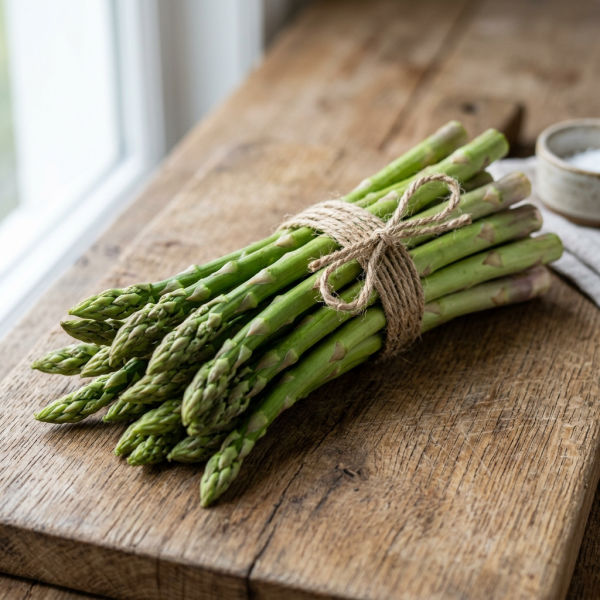
Asparagus
Lab-tested reference nutrition values for a standard 100g serving.
🧬 Micronutrients & Longevity Highlights
📋 Quick Summary: Asparagus Nutrition Facts (Per 100g)
A standard 100g serving of Asparagus provides 53 calories, 2.3g protein, 4.1g carbs (g fiber), and 3.5g fat.
🛡️ Primary Health Benefits & Target Functions
Fluid Regulation
Clinically backed nutritional pathway for longevity promotion.
Cellular Repair
Clinically backed nutritional pathway for longevity promotion.
Prebiotic Activity
Clinically backed nutritional pathway for longevity promotion.
5-Pillar Biohack & Cellular Health Matrix: Asparagus
Every food influences gene expression, cellular autophagy, mitochondrial output, and gut microbiome diversity. Below is the clinically mapped 0–100 biohacking profile for Asparagus.
Biochemical Balance & Calorie Energy Split
In a standard 100g portion (53 kcal), energy is distributed as:
High Folate (52% DV) & Glutathione — the brain’s master cellular antioxidant defender.
Supplies Potassium and Asparagine assisting fluid balance and muscle recovery.
Top natural source of Inulin prebiotic fiber feeding beneficial Bifidobacteria.
Rutine flavonoid strengthens capillary walls and improves blood circulation.
Natural diuretic properties support fluid balance and metabolic cleanup.
🍽️ Dietary Suitability & Lifestyle Fitting
- Ketogenic & Low-Carb: Highly compatible with only 2g net carbs per 100g.
- High-Protein / Athletic: Provides 2.3g protein per 100g; pair with higher-protein foods to reach 30g+ leucine thresholds.
- Volume Eating: Superb high-volume satiety food (53 kcal/100g).
🍳 Culinary Science & Nutrient Retention
To maximize the nutritional bioavailability of Asparagus, steaming or gentle sautéing preserves water-soluble vitamins. Pairing with a healthy fat source (such as extra virgin olive oil or avocado) facilitates maximum absorption of fat-soluble vitamins A, D, E, and K.
⚖️ Visual Calorie portion Equivalents
A 100g portion of Asparagus (53 kcal) is equivalent in energy density to:
🔄 Popular Food Swaps & Comparisons for Asparagus
Compare calorie density, protein ratios, and volume eating swap metrics for Asparagus:


❓ Frequently Asked Questions (Asparagus)
How many calories are in 100g of Asparagus?
100 grams of Asparagus contains approximately 53 calories, along with 2.3g protein, 4.1g carbohydrates, and 3.5g fat.
What are the macros for Asparagus?
Per 100g serving, Asparagus provides 2.3g protein, 4.1g carbs (2.1 g fiber), and 3.5g fat.
Is Asparagus high in protein?
Asparagus provides 2.3g of protein per 100g serving, making it a valuable component of visual macro tracking on NutriVisual.
📋 Embed Asparagus Card on Your Blog or Site
Copy this interactive HTML widget snippet to embed live nutrition metrics on any food blog or article.


